
Free Cease & Desist Letter/Order Template
A Cease and Desist Letter will provide you with a straightforward way to formally require someone to stop harmful, unlawful, or infringing behaviour. It outlines your rights clearly and creates a written record that can support further legal action if needed.

What type of letter would you like to create?
Fill forms in a few steps
Save, print & download
Done in 5 minutes
What is a Cease and Desist Letter?
A Cease and Desist Letter is a formal legal document used to demand that an individual or organisation stop engaging in specific actions that violate your legal rights.
These letters are not only a way to assert your position but also serve as a record of your attempt to resolve the issue before escalating it to legal proceedings.
Often used in cases of harassment, defamation, intellectual property infringement, or breach of contract, a Cease and Desist Letter highlights your concerns and warns of potential legal consequences if the wrongful activity continues.
This document is particularly effective in disputes where clear communication and documentation are essential to protecting your interests.
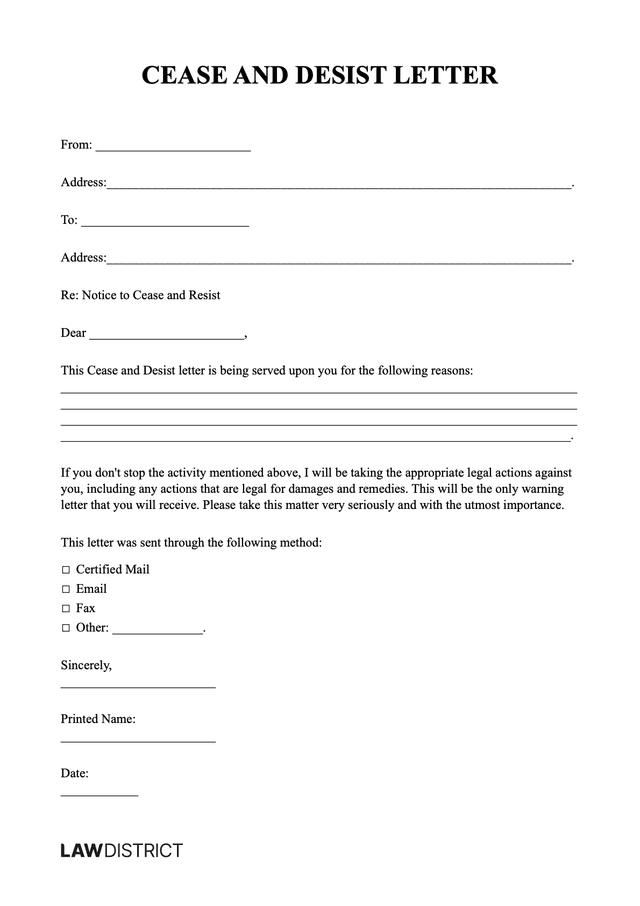
To get a better understanding of what this letter looks like, you can find an example of a Cease and Desist template letter in the UK below.
Cease and Desist example
To better understand the structure and tone of a Cease and Desist Letter, it can be helpful to review a sample.
Below, you can see a free printable Cease and Desist Letter template, which you can print or download completely for free.
Cease and Desist uses
This document can be used in a range of situations. Below are some of the most common uses:
Cease and Desist Letter for harassment
Harassment can take many forms, including unwanted communication, stalking, or other behaviours that cause distress. Harassment is illegal in the United Kingdom (Protection from Harassment Act, 1997).
If you’re the target of harassment, you can send a Cease and Desist, meaning you formally request that the offending party cease these actions immediately.
This document is particularly effective for individuals experiencing workplace harassment, neighbour disputes, or persistent personal conflicts. It sets clear boundaries and provides written evidence of your effort to address the issue before seeking legal intervention.
Cease and Desist Letter for defamation
Defamation occurs when false statements are made about you or your business, damaging your reputation (Defamation Act, 2013).
A Cease and Desist Letter for defamation demands that the offending party stop spreading harmful falsehoods and, in some cases, retract their statements.
This type of letter can also request the removal of defamatory content from online platforms or social media, guaranteeing that your reputation is restored.
Defamation-related Cease and Desist Letters often serve as a precursor to formal legal action if the behaviour continues.
What are the grounds for a Cease and Desist?
The grounds for issuing a Cease and Desist Letter depend on the specific circumstances of the dispute. Common justifications include:
- Harassment: Persistent unwelcome behaviour that causes emotional or physical harm.
- Defamation: False and damaging statements, either written (libel) or spoken (slander).
- Intellectual property infringement: Unauthorised use of copyrighted material, trademarks, or patents.
- Breach of contract: Failure to uphold the terms of a legally binding agreement.
- Trespassing: Unauthorised entry onto private property.
- Unfair business practices: Deceptive, misleading, or unethical commercial conduct.
How to write a Cease and Desist Letter
Drafting an effective Cease and Desist Notice involves careful attention to detail. Follow these steps to guarantee that your letter is comprehensive and legally sound:
1. Clearly identify the parties involved
Include the names and contact details of both the sender (you) and the recipient (the offending party).
2. Specify the offending behaviour
Provide a detailed description of the actions or conduct that prompted the letter. Be factual and precise, avoiding inflammatory language.
3. State your demand
Clearly outline what actions the recipient must cease and any additional requirements, such as removing defamatory content or returning intellectual property.
4. Outline potential legal consequences
Warn the recipient of the legal steps you will take if they fail to comply, including potential damages or injunctions.
5. Include delivery details
Record the method by which the letter is delivered, such as certified mail or email, to maintain a paper trail.
Our downloadable Cease and Desist Letter template (UK) includes these elements, making it easier for you to draft a professional and effective notice.
If you don’t know how to send a Cease and Desist letter, please refer to the last FAQ below.
Cease and Desist FAQs
Here are answers to some of the most common questions about Cease and Desist Letters:
No, a Cease and Desist Letter does not create a legal record by itself. It is simply a formal notice requesting that the recipient stop specific actions. However, if legal action follows, the letter can serve as evidence that you attempted to resolve the issue informally.
While a Cease and Desist Letter is not legally enforceable by itself, it is a strong warning of potential legal action. It often persuades the recipient to comply to avoid further escalation. For enforceable action, a court-issued order, such as an injunction, may be required.
Ignoring a Cease and Desist Letter can result in legal proceedings. The sender may pursue claims for damages or seek court orders to enforce compliance. Responding to the letter, either by ceasing the offending activity or consulting a solicitor, is usually advisable.
In the United Kingdom, the best way to send a Cease and Desist letter is tosend it by recorded delivery through Royal Mail.
That way, you can get a receipt that proves the letter was received.
If it’s easier for you, you can also send it by email. If you choose this method, always keep proof of sending and, where possible, request a read receipt. Using both recorded post and email offers the strongest evidence that the recipient has received your notice.
Try Lawdistrict Now
Instant and complete access to our entire library of legal forms
Edit, download and print in PDF from any device
Save time and money on legal document creation