
Resignation Letter template UK
A resignation letter is a formal written notice given by an employee to their employer to announce their decision to leave a job. It typically includes the job title, notice period, and final working day. It helps guarantee a clear and professional end to the employment relationship.

Fill forms in a few steps
Save, print & download
Done in 5 minutes
What is a Resignation Letter?
A Resignation Letter is a formal written notice submitted by an employee to their employer to communicate their decision to leave their position.
It outlines key details such as your notice period and intended last working day. It also serves a record of your intention to leave the job.
This document plays an important role in terminating the employment relationship properly. It helps your employer prepare for your exit, and helps maintain professionalism.
You can download a simple Resignation Letter template from this page, which you can use as a guide to draft your own version of this legal document.
What to include in a Resignation Letter?
When writing a Resignation Letter, the goal is to keep the message clear, polite and professional. The document typically includes:
- Your job title
- Date of writing
- Date you intend to leave the role
Consider briefly expressing appreciation for the opportunity and for all the guidance you’ve received. You can also offer assistance during the transition period. Including these details helps guarantee there is no ill-will between you and your employer moving forward.
Typically, in a Letter of Resignation, you generally avoid going into detail about your reasons for leaving unless necessary.
Instead, provides a simple announcement of your departure, focused on notice and timing. Using a Letter of Resignation template can help you include the correct details and tone.
Resignation Letter sample
A well-written Resignation Letter can help you clearly and professionally communicate your departure.
Looking at a sample Resignation Letter helps you understand the expected layout, tone and structure of the document.
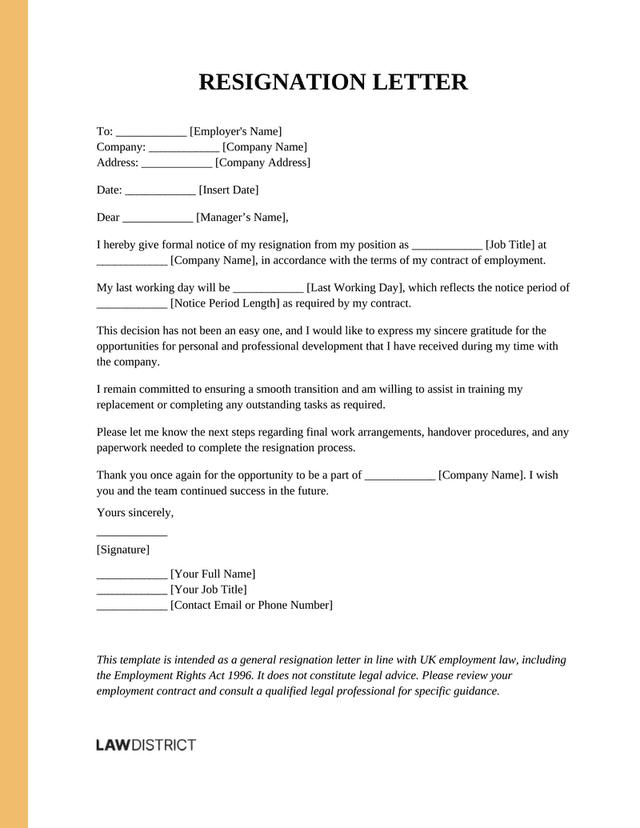
How to write a Resignation Letter in the UK
Below are the typical elements included in a Resignation Letter in the UK.
Include your personal and contact information
If you're sending a physical copy, include your contact details and the date. These should appear in the top right or left corner of the letter depending on formatting preferences.
Address the letter to your manager/team lead
Use a formal salutation such as "Dear [Manager’s Name]". Try not to use generic greetings. Addressing your manager directly shows professionalism, which helps make sure that the message is communicated appropriately.
Clearly state your intention to resign
Open with a direct sentence such as “I am writing to formally resign from my position as [Job Title] at [Company Name].” This leaves no ambiguity about your intentions.
Mention your notice period and final working date
Specify your contractual notice period and the expected final working day. For example, clearly state your last day will be one month from the date of the letter.
Keep your reasons brief (or leave them out)
You do not have to include your reasons for leaving. If you choose to mention it, keep it general, such as “I have decided to pursue another opportunity.” Avoid including any grievances or personal details.
Express gratitude where appropriate
It’s customary to thank your employer for the experience or skills gained during your employment. This helps you leave on good terms and keeps your professional reputation intact.
Offer to support the transition
If possible, mention that you’re happy to help with the handover or training of a replacement. This shows goodwill and consideration for the team you're leaving behind.
End the letter formally
Use a polite closing such as “Yours sincerely,” followed by your signature (if sending a printed copy) and your full name.
Before writing your own, it's a good idea to take a look at our job Resignation Letter template. This can help you create a comprehensive and standard Resignation Letter.
Related employment documents
Resignation Letter FAQs
These are some of the most frequently asked questions by employees preparing to resign.
You should submit your Resignation Letter as soon as you’ve made a firm decision to leave and are ready to give notice.
Most contracts require written notice to be handed in before the notice period begins. Make sure your departure follows proper procedure and allows your employer to start planning the transition. If you need any advice on how best to do this, you can contact HR.
Yes, you can email your Resignation Letter, especially if you're working remotely or if it's specified as acceptable in your employment contract.
Make sure the tone remains formal, and use a professional subject line such as “Resignation – [Your Full Name]”.
You can request to resign with immediate effect, but it's usually only accepted in exceptional cases such as:
- Health issues
- Personal emergencies
- Mutual agreement
Immediate resignation may breach your contract if no valid reason is provided, so it's advisable to check your terms of employment first or seek legal advice before proceeding.
Try Lawdistrict Now
Instant and complete access to our entire library of legal forms
Edit, download and print in PDF from any device
Save time and money on legal document creation