
Free Letter of Intent Template (UK)
A Letter of Intent is a document used to outline the initial terms of a proposed agreement before a formal contract is drawn up. It signals interest in entering into a business or legal relationship. It usually includes the main points being negotiated for the agreement.

Fill forms in a few steps
Save, print & download
Done in 5 minutes
What is a Letter of Intent (LOI)?
A Letter of Intent (LOI) is a written document that states one party’s intention to enter into a formal agreement with another. It sets out the main points under discussion for the agreement.
This legal document allows both parties to understand and negotiate the terms and conditions before entering the agreement. It’s often used in:
- Business transactions
- Property deals
- Service agreements
Letters of Intent are often not legally binding. Certain specific clauses can be legally enforceable, such as confidentiality clauses.
Letter of Intent sample PDF & Word
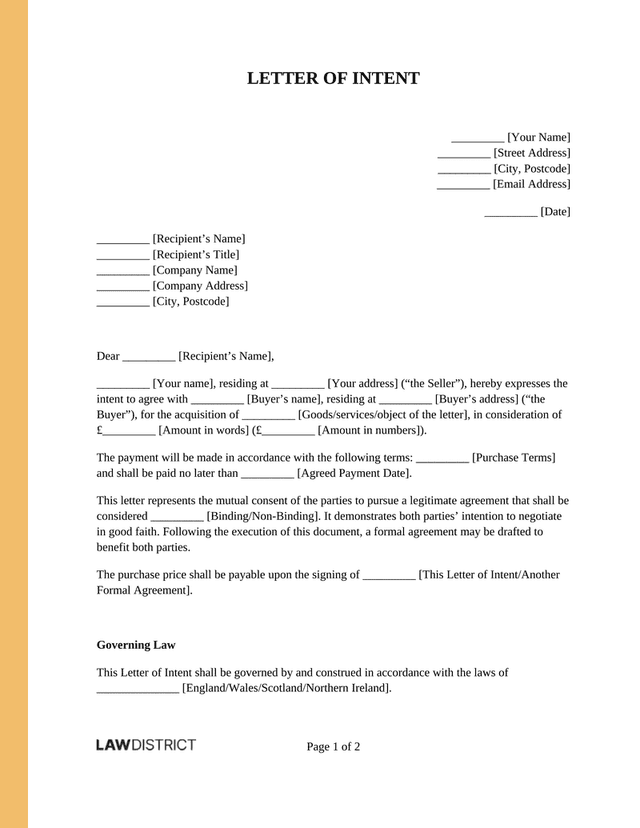
Before writing a Letter of Intent, it helps to review a sample. Looking at a completed Letter of Intent template can show you what it should look like and the relevant information it should include.
How to write a Letter of Intent
An effective Letter of Intent typically includes the following elements:
- Your full name and address
- Date the letter is written
- Recipient's name, title, and address
- A clear introduction stating your name and intent
- Details of the proposed agreement. These details can vary greatly based on your specific agreement.
- Statement on the binding nature of the document (binding or non-binding)
- Mention of good faith to show mutual intent to proceed
- Reference to a future formal agreement, if applicable
- Payment terms, such as when and how payment will be made
- Governing law, based on the relevant UK jurisdiction (e.g. England or Scotland)
- Signatures of both parties, including printed names and date
Refer to Letter of Intent examples to get an idea of the tone and structure of this document. You can download our free Letter of Intent template to help you write your document.
When can you use a Letter of Intent?
There are many different situations in which a Letter of Intent can be useful. Here are some of the most frequent uses of the document:
Letter of Intent for business
An LOI can be used in early-stage business negotiations, such as mergers, acquisitions, or partnerships. It outlines basic terms like:
- Responsibilities
- Payment structure
- Timelines
Letter of Intent for the sale of goods or services
Often used by suppliers, manufacturers, or service providers to confirm their intent to enter into a deal. It can clarify:
- Pricing
- Quantities
- Delivery dates
- Payment terms
Letter of Intent for property transactions
LOIs can also help buyers, sellers, or tenants clarify expectations before signing a lease or sale agreement. IT typically includes details such as:
- Sale or rent price
- Deposit
- Any conditions
Letter of Intent for employment or freelance work
It can also outline a job or freelance offer before the candidate is given a formal employment contract. This can include:
- Role description
- Compensation
- Working terms
- Start date
Letter of Intent for education or training
Applicants or organisations can express interest in enrolling in or offering an academic course or professional training. It may include:
- The scope of collaboration
- Timeframe
- Expected outcomes
Using a notice of intent helps both parties feel more secure and organised as they work towards a final deal.
FAQs about Letter of Intent
Here are some of the most frequently asked questions about Letters of Intent.
A Letter of Intent is not typically legally binding, although it can include terms that are. Clauses for confidentiality, exclusivity, or for resolving disputes could be enforceable in the UK.
Just to be clear, always indicate whether the letter should be binding or not. This can help guarantee that both sides are aware of what their obligations are prior to signing.
Yes, it’s possible to terminate a Letter of Intent. The document itself may include a clause explaining how and when it can be cancelled.
If not, either party may typically withdraw from negotiations unless a binding clause (like exclusivity) prevents it. Always send a written notice if you’re terminating an LOI. You should also keep a record of this notice.
You can attach supporting documents to clarify the proposed agreement. You might want to include any of the following documents:
- Price list
- Draft contract
- Description of goods or services
- Financial statement
Adding these attachments helps both parties fully understand the terms and conditions of the proposed agreement. They can then prepare for the next steps and draft the final contract.
Try Lawdistrict Now
Instant and complete access to our entire library of legal forms
Edit, download and print in PDF from any device
Save time and money on legal document creation