
Settlement Agreement template UK
A Settlement Agreement helps employers and employees formally end a workplace dispute or employment relationship on agreed terms, offering clarity, legal protection, and a clean break for both sides.

Fill forms in a few steps
Save, print & download
Done in 5 minutes
What is a Settlement Agreement?
A Settlement Agreement is a legal document entered into by an employer and an employee to resolve a workplace issue or bring employment to an end on mutually agreed terms.
In most cases, the employee receives a compensation payment in exchange for waiving their right to bring specific employment claims before an employment tribunal.
Different types of Settlement Agreements
Depending on your situation, you may need to create one type of agreement or another to make sure the terms cover the context of your case.
Below are some of the most common types of Settlement Agreements:
Termination Settlement Agreements
This document is used when employment is ended by mutual agreement. These typically outline notice arrangements, compensation, accrued holiday pay, tax treatment, return of company property, and confidentiality obligations.
Redundancy Settlement Agreements
Redundancy Agreements are offered when a role is at risk of redundancy. They often include an enhanced redundancy payment, notice terms, and agreements relating to references and the redundancy process.
Grievance or dispute Settlement Agreements
Suppose you are having a dispute with an employee. In that case, you can use this to resolve ongoing workplace disputes related to discrimination, harassment, or disagreements over terms in the employment contract, without ending the working relationship.
These agreements clarify the agreed actions, confirm that the matter is fully resolved, and include terms for compensation, if applicable.
Post-termination dispute Settlement Agreements
If you are working on a settlement after terminating the contract, you can use a post-termination Settlement Agreement.
For example, if an employee raises potential legal claims, this agreement settles the dispute and secures a definitive termination.
Protected conversation Settlement Agreements
Creating these agreements usually results from confidential discussions that are meant to explore settlement terms. They are formalised in a written confidentiality Settlement Agreement that protects both parties.
PDF & Word sample Settlement Agreement
Reviewing a sample is a helpful way to understand the key clauses and terms needed in a Settlement Agreement in the United Kingdom.
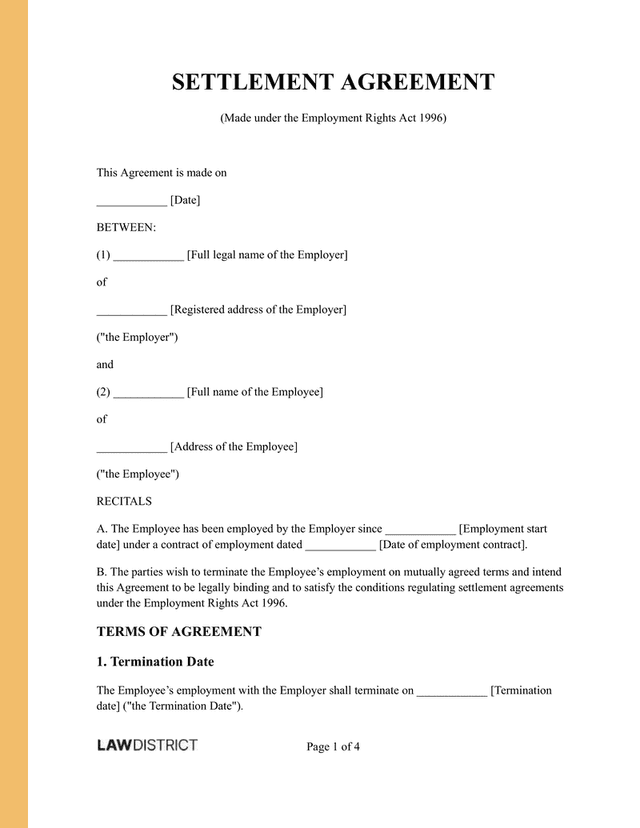
How to write a Settlement Agreement
With a well-written Settlement Agreement that is compliant with United Kingdom employment laws, you can avoid further disputes and issues in the future.
Use our Settlement Agreement template, and follow the steps below:
- Set out the parties and background: Identify each party in the agreement, and briefly describe the reason for the settlement.
- Explain the termination terms: Confirm the final working day, notice arrangements (worked or paid in lieu), and any outstanding pay or benefits due, including holiday entitlement.
- Detail the settlement payment: Specify the compensation amount and how and when it will be taxed. Clarify which sums are contractual and which may fall under the £30,000 tax exemption.
- List the claims being waived: Clearly outline the employment tribunal claims the employee agrees not to pursue. This section must be precise to make sure the waiver is legally enforceable.
- Add confidentiality and obligations: Include confidentiality terms, non-disparagement wording, and details about returning company property. Attach an agreed reference if applicable.
- Include the legal advice: Confirm the employee has received independent legal advice and attach the adviser’s certificate.
- Sign the document: Make sure both parties sign and date the agreement, noting the governing law.
You can use our e-sign tool to sign the document with the other party without needing to meet in person.
Settlement Agreement FAQs
To resolve any doubts about creating or negotiating a Settlement Agreement in the UK, go over the answers to the following commonly asked questions below.
Yes. An employee can propose a Settlement Agreement to resolve a workplace issue or negotiate an agreed-upon end to the employment.
Employers do not have to be the party to offer one, but many will consider it to avoid a formal grievance or potential tribunal claim. The request can be made during a protected conversation or on a without-prejudice basis, allowing both sides to explore terms confidentially.
A reasonable Settlement Agreement reflects the value of potential claims, notice entitlement, and the circumstances of the exit. Many agreements include a tax-free compensation payment, holiday pay, notice or PILON, and a reference.
It’s recommended that all negotiations should be fair, transparent, and genuinely voluntary.
As the employer, you typically must pay the legal fees for the employee’s mandatory independent advice, typically as a fixed contribution.
Employers may also pay the settlement amount and any notice or holiday pay. The employee rarely pays anything unless they instruct their adviser beyond the employer’s contribution.
An employee may breach the agreement if they disclose confidential terms, make insulting comments about the employer, fail to return company property, or bring a claim that they have agreed to waive.
Breaches can lead to repayment of part of the settlement sum or legal action for damages, depending on the clauses included.
If you are the employer, you must prove the breach is serious and directly linked to the obligations set out in the agreement.
A Settlement Agreement does not legally need to be witnessed to be valid, unless it has been prepared as a deed.
What is required is that the employee receives independent legal advice from a qualified adviser who signs an adviser’s certificate.
Some employers choose to use a witness for signatures as a best-practice measure, but it is not a statutory requirement.
Try Lawdistrict Now
Instant and complete access to our entire library of legal forms
Edit, download and print in PDF from any device
Save time and money on legal document creation