
Deed of Variation Template (UK)
A Deed of Variation is a legal document used to change how a deceased person’s estate is shared out, without rewriting the will. It lets beneficiaries redirect assets, update gifts, and adjust tax outcomes while staying within UK inheritance rules.

Fill forms in a few steps
Save, print & download
Done in 5 minutes
What is a Deed of Variation?
A Deed of Variation is a legal document that allows beneficiaries to change the way an estate is distributed after someone has died.
It works alongside the original will or the intestacy rules. It does not replace them.
You can use it to redirect part or all of an inheritance to another person, charity, or trust.
It’s often used for:
- Family arrangements
- Tax planning
- Correct unfair or outdated provisions
To be valid, all affected beneficiaries must agree and sign the deed in the correct form as a deed.
Why use a Deed of Variation?
You can use this legal document in many different situations. Some of the most common are described in the table below:
| Situation | Explanation |
|---|---|
| Providing for another family member | Redirect part of your inheritance to a child, grandchild, or other relative. |
| Supporting a charity | Change a gift so that a charity receives some of the estate. |
| Balancing inheritances | Adjust shares so beneficiaries are treated more evenly. |
| Updating an outdated will | Amend gifts that no longer match the family or financial position. |
| Inheritance tax planning | Redirect assets to reduce inheritance tax, if done within HMRC limits. |
| Passing assets to the next generation | Allow children or grandchildren to inherit directly. |
| Correcting mistakes | Fix unclear, impractical, or incorrect gifts in the will. |
| Dealing with jointly owned property | Redirect a share that would otherwise pass automatically to a joint owner. |
Deed Variation free template (PDF & Word)
Before you draft your own Deed of Variation, it’s helpful to review a sample. Here is a quick template you can use as a guide:
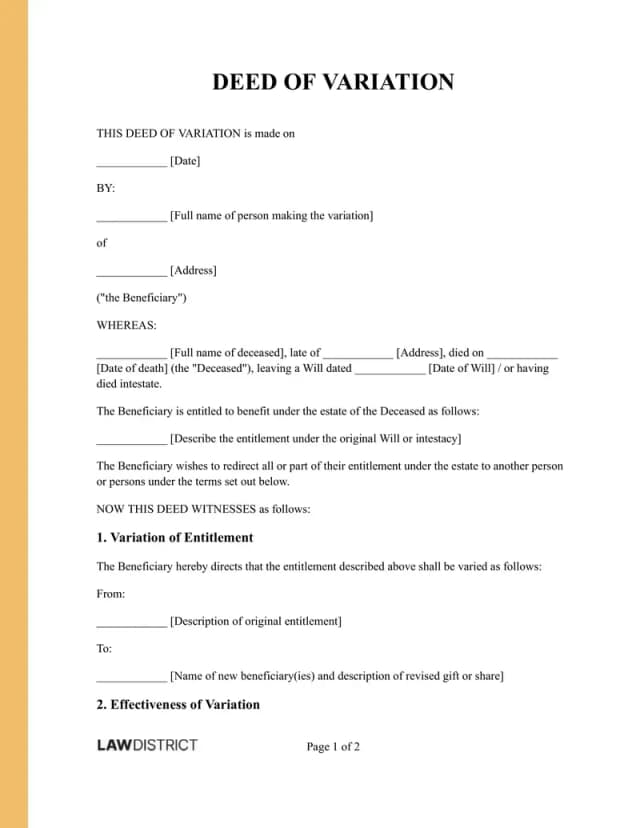
How to create a Deed of Variation in the UK
A Deed of Variation should follow a clear structure. It must identify the estate, explain the changes, and be signed correctly as a deed. Here are the elements that should be included:
Identify the parties and the deceased
State the full names and addresses of all beneficiaries whose entitlement is changing. Name the deceased, with date of death and last address. Identify the executors or personal representatives where relevant.
Refer to the will or intestacy
Confirm which will, codicil, or intestacy rules are being varied. Include the date of the will and any codicils. Make it clear that the deed changes how that document or those rules take effect.
Describe the original gifts
Explain the existing gifts or shares that are being changed. Refer to specific clauses, the residue, or named assets such as property, accounts, or investments. Use a schedule if there are many items.
Set out the new arrangements
State exactly how the gifts will now be distributed. Name the new beneficiaries, their shares, and any conditions. Use simple, precise sentences so there is no doubt about who receives what.
Include tax statements
If you want HMRC to treat the changes as if made by the deceased, include the required inheritance tax and capital gains tax statements. These should follow current HMRC wording and refer to the correct legislation.
Confirm who bears any tax
Explain who will pay any additional tax that arises: the new beneficiary, the original beneficiary, or the estate. Clear wording helps prevent disputes over tax and administration costs.
Execution as a deed
Each affected beneficiary must sign the document as a deed. Signatures should be witnessed by an independent adult. Date the deed on signing and check it’s completed within two years of death if tax treatment is required.
Attach schedules and details
Attach schedules for property descriptions, asset lists, or share calculations where needed. These form part of the deed and make complex arrangements easier to follow in practice.
If you want to make a comprehensive version of this document in just a few minutes, you can use our customisable template. Simply enter your details and download your document instantly.
Alternatives to a Deed of Variation
While this document is useful in many situations, alternative solutions may suit your situation more.
| Alternative | Explanation |
|---|---|
| New will or codicil (before death) | The person making the will changes their own will or adds a codicil while they still have capacity. |
| Disclaiming an inheritance | A beneficiary refuses their inheritance so it passes under the will or intestacy as if they had died first. |
| Family arrangement agreement | Family members sign a private agreement on how to share assets, without using a formal Deed of Variation for tax. |
| Trust restructuring | Trustees use their powers, where allowed, to appoint or advance capital to different beneficiaries. |
| Court order | The court approves changes to an estate or trust, for example under the Inheritance (Provision for Family and Dependants) Act. |
Deed of Variation FAQs
Below are the answers to some of the most common questions our users have about using this document in the UK.
You must complete the Deed of Variation within two years of the date of death for it to count for inheritance tax and capital gains tax. After two years, you can still make one, but it will not receive the same tax treatment.
HMRC only needs to see the deed if it affects inheritance tax or capital gains tax and you are claiming tax treatment. In those cases, you normally send HMRC a copy or the required forms.
A Deed of Variation does not normally change the executors. It only changes how the estate is distributed.
To change executors, you usually need one of the following:
- Renunciation
- Replacement appointment
- Court order
Yes. A correctly drafted and signed Deed of Variation is legally binding on those who sign it.
It must be executed as a deed and properly witnessed. Once signed, the personal representatives must follow its terms when administering the estate.
You can prepare and sign a Deed of Variation without a solicitor. However, the wording must be precise and the tax statements must be correct.
Many people choose to get legal advice to avoid errors and unexpected tax or legal consequences.
Try Lawdistrict Now
Instant and complete access to our entire library of legal forms
Edit, download and print in PDF from any device
Save time and money on legal document creation