
Free Property Inspection Checklist
A Property Inspection Checklist is an essential legal form to avoid disputes with tenants. Use our Checkout Inventory template to ensure accurate documentation and fair handling of rental property conditions.

Fill forms in a few steps
Save, print & download
Done in 5 minutes
What is a Rental Property Inspection Checklist
A Rental Property Inspection Checklist is a crucial document that outlines the condition of a property at a specific time.
This type of document is primarily used by landlords and property managers to document the state of a property before a tenant moves in and after they move out.
Also known as a Tenancy Checkout Report or Checkout Inventory, this document serves as a reference for any deductions taken from the security deposit to cover damages not attributed to normal wear and tear.
Property Inspection Checklist sample
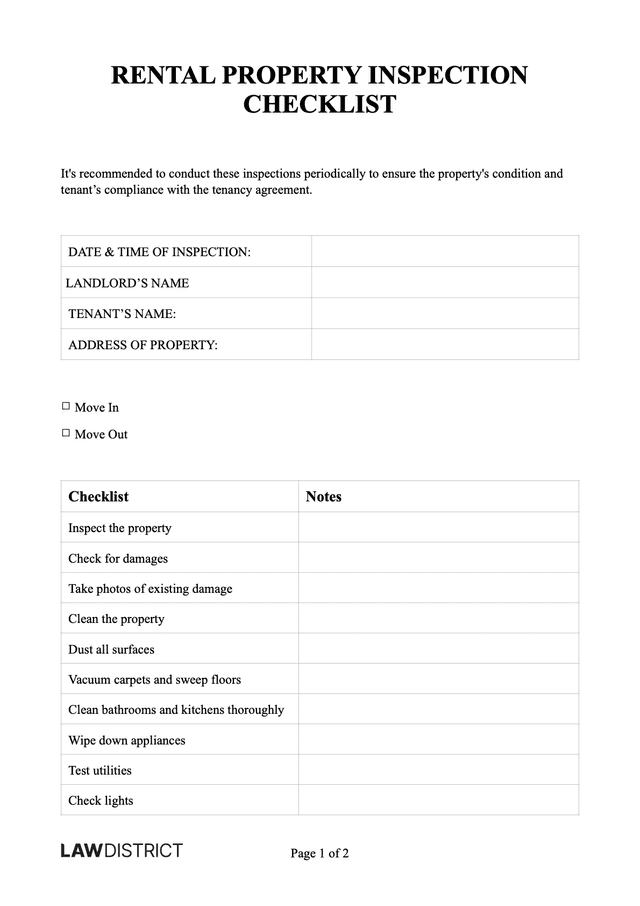
Below you’ll find an example of a completed Checkout Inventory.
When to use a Checkout Report
A property checkout report is essential for maintaining a record of the condition of a property at the end of a tenancy and can serve as a critical tool for landlords, property managers, and tenants.
Here are some specific scenarios when you should use a Property Checkout Report:
- At the end of a lease: Use when a lease ends to ensure both parties agree on the property's final condition.
- For residential and commercial properties: Necessary for all types of leased property, including offices, retail spaces, and industrial sites, and residential spaces such as flats, houses, or rooms in a shared property.
- To record utility meter readings: Recording the final readings of water, gas, and electricity meters can avoid disputes over utility bills.
- To check safety devices: Use the report to verify that all safety devices, like smoke detectors and carbon monoxide alarms, are in working order and compliant with safety regulations.
- To inspect furniture and appliances: Whether the property is furnished or not, the checkout report should include a thorough check and status recording of all appliances and furnishings provided by the landlord.
- Detailed room-by-room analysis: Employ the checkout report to document the condition of each room in the property.
- Before refunding the security deposit: Finalising the checkout report is a step that should precede the refund of any security deposit.
- To update property records: Updating your property management records with the latest condition of the property helps in maintaining accurate data for future reference, which is beneficial for legal, tax, and maintenance planning.
By using a property checkout report in these scenarios, landlords and property managers can ensure a smoother transition between tenants, maintain their property's value, and uphold their legal responsibilities.
Terms to include in a Property Inspection Checklist
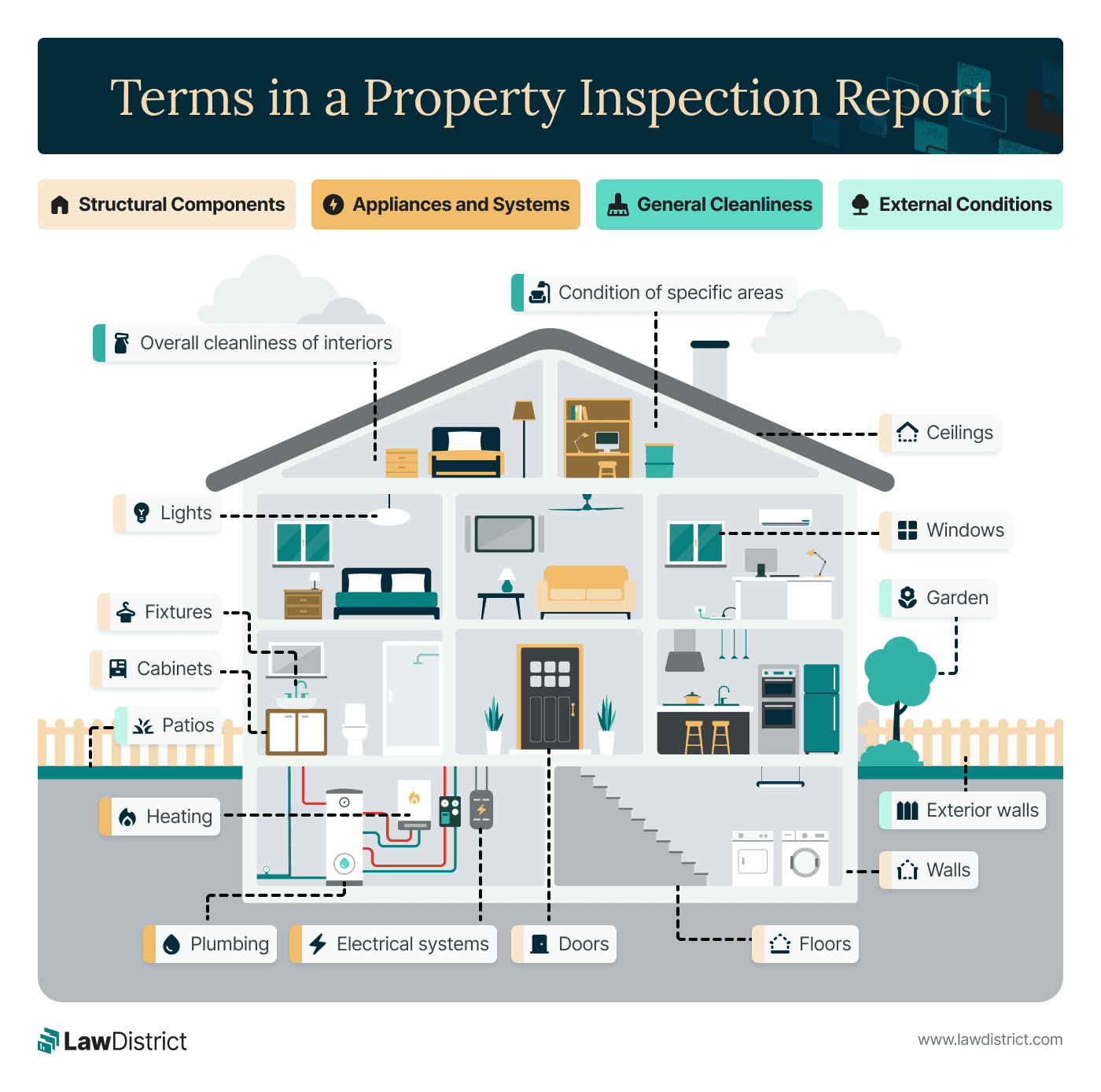
When creating a Property Inspection Checklist, you should include these terms:
Structural Components:
- Walls
- Floors
- Ceilings
- Windows
- Fixtures
- Doors
- Lights
- Cabinets
Appliances and Systems:
- Heating
- Plumbing
- Electrical systems
General Cleanliness:
- Overall cleanliness of interiors
- Condition of specific areas
External Conditions:
- Garden
- Patios
- Exterior walls
Each section should clearly define the expected condition to maintain consistency and clarity in property evaluations.
How to write a Rental Property Inspection Checklist
Our UK Rental Property Inspection Checklist template is designed to be easy to use while ensuring you capture all necessary details for a thorough inspection.
Follow these steps to complete the template:
- Access the template: Select the Property Inspection Report template to get started.
- Add property information: Enter general property details such as address, type of property, and date of inspection.
- Provide inspector details: Fill in the name and contact information of the person conducting the inspection.
- Carry out room-by-room inspection: Go through each room listed in the template. For each room, assess and record the condition of walls, floors, ceilings, windows, and any fixtures.
- Check appliances and systems: Evaluate the operational status of appliances (refrigerator, oven, etc.) and systems (heating, plumbing, electrical), noting any malfunctions or signs of wear.
- Inspect General cleanliness and safety: Document the overall cleanliness of the property and check for any safety hazards, noting any issues.
- Check external areas: Inspect external aspects of the property such as the garden, patios, and any outbuildings. Record their condition and note any required maintenance.
- Add comments and overall assessment: Provide additional comments on the overall condition of the property and any recommendations for maintenance or repairs.
- Sign: Ensure that the inspector and, if present during the inspection, the tenant, sign the report to acknowledge the findings.
- Save and distribute: Save the completed document and provide copies to relevant parties, ensuring both the landlord and tenant have a copy for their records.
These steps will guide you in creating a thorough Property Inspection Report, aiding in clear communication and understanding between you and your tenant.
FAQs about Property Inspection Checklists
Here you can find answers to commonly asked questions relating to Checkout Reports.
Obtaining a property inspection report is straightforward with our free Property Inspection Report template.
You can customise the template to match the specific requirements of your property. This template helps you cover all the necessary sections, making it easier for you to conduct a comprehensive inspection.
It is best to review your document with a legal professional to verify that it adheres to the requirements of your specific case.
The inspection of a rental property can be performed by different individuals depending on the circumstances:
- Landlord: Usually the landlord conducts the inspection, giving them first-hand knowledge of the condition of the property.
- Property manager: For landlords who own multiple properties or those who do not live near their rental properties, a property manager might conduct the inspections.
- Professional inspector: In some cases, especially when dealing with high-value properties or if required by local laws, a professional inspector might be hired.
- Tenants: While not conducting the formal inspection themselves, tenants are usually involved in the initial and final walkthroughs to agree on the condition of the property noted in the report.
A walkthrough involves the following steps:
- Scheduling: Arrange a walkthrough at the beginning and end of the tenancy.
- Preparation: The landlord should provide the tenant with a copy of the initial inspection report in advance.
- During the walkthrough: As both parties walk through the property, they should carefully check each area against what was noted in the initial report.
- Note-taking: Both parties should note any discrepancies or changes in the condition of the property. It’s helpful to take photos during the walkthrough.
- Discussion and agreement: Discuss any discrepancies or damages observed during the walkthrough. This is the time to address any concerns and come to an agreement.
- Signing off: Both parties should sign off on the final inspection report. This document should reflect any changes agreed upon.
Try Lawdistrict Now
Instant and complete access to our entire library of legal forms
Edit, download and print in PDF from any device
Save time and money on legal document creation